Back to Journal Audit & Assurance

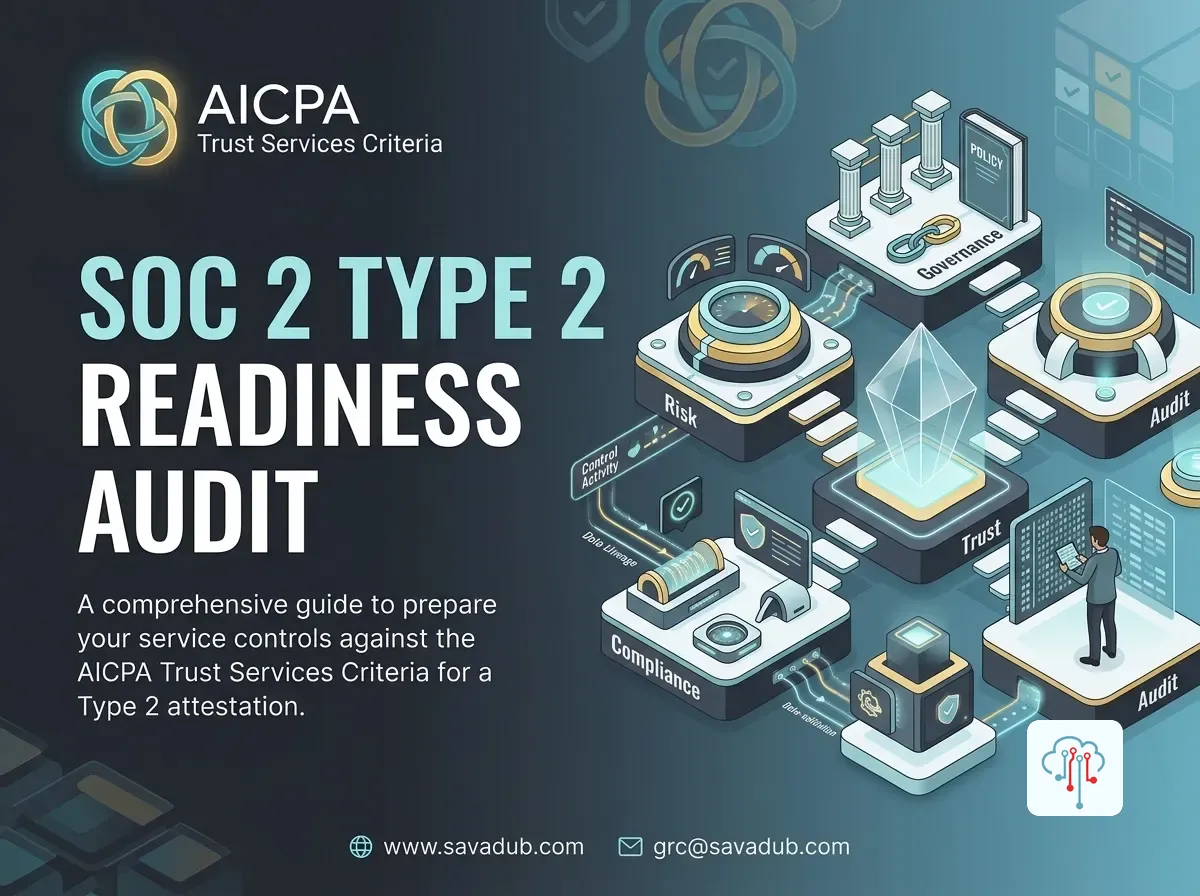
SOC 2 Type II - The Definitive Guide to Sustained Compliance and Audit Success

Everything you need to know about SOC 2 Type II — from the observation period and evidence collection to what auditors test, how to maintain year-round readiness, and how to use your Type II report to close enterprise deals.
SOC 2 Type II - The Definitive Guide to Sustained Compliance and Audit Success

SOC 2 Type II: The Definitive Guide to Sustained Compliance and Audit Success

SOC 2 Type II is the gold standard of security assurance for service organisations. While Type I demonstrates that your controls are designed correctly at a single point in time, Type II proves something far more commercially valuable: that those controls operated effectively, consistently, over a sustained period — typically six to twelve months. For enterprise buyers, financial institutions, and regulated industries, the difference is material.

This guide walks you through everything you need to know about SOC 2 Type II — the observation period, what auditors test, how to build a year-round compliance posture, and how to turn your Type II report into a powerful sales and trust asset.


What Makes Type II Different from Type I

SOC 2 Type I is a design assessment — the auditor asks "are your controls designed to work?" SOC 2 Type II is an operational assessment — the auditor asks "did your controls actually work, consistently, throughout the observation period?"

This distinction matters enormously. A Type II report requires:

  • A defined observation period — typically six months minimum, twelve months for the most credible reports
  • Evidence of control operation across that entire period, not just at a point in time
  • Sampling — auditors select samples from throughout the period, not just the most recent month
  • Consistency — a single month of access review logs is not sufficient; auditors want to see the cadence of operations throughout

Enterprise buyers — particularly those in financial services, healthcare, and technology — understand this distinction acutely. A twelve-month Type II report tells them that your security controls have been running, tested, and maintained as a genuine operational practice, not assembled for audit season.


The Observation Period: Planning Your Timeline

One of the most common strategic mistakes organisations make is treating SOC 2 as a project with an end date rather than an ongoing operational state. The observation period begins the moment you have completed remediation and your controls are fully operational.

Minimum observation period: Six months is the shortest period most CPA firms will issue a Type II opinion for. Some enterprise buyers — particularly banks and healthcare systems — specifically require a twelve-month report.

Starting the clock: The observation period only begins when controls are genuinely in operation. Starting your Type II clock with controls that aren't fully deployed results in a qualification period that produces findings. Ensure your readiness work is complete before declaring the observation period open.

Choosing your audit window: Most organisations align their SOC 2 audit window to either their fiscal year or their largest customer's procurement cycle. Common windows are January–December or April–March. Working with your CPA firm to choose an optimal window ensures the audit examination period aligns with your operational capacity.


What SOC 2 Type II Auditors Actually Test

During a Type II examination, auditors perform substantive testing across every control in scope. For each control, they will:

1. Select a Sample

Auditors use statistical sampling to select evidence items from throughout the observation period. For a twelve-month period, a control that runs monthly will have all twelve instances tested. A daily control may have twenty to thirty samples pulled. Gaps in evidence for sampled periods produce findings.

2. Test Control Operation

Testing methods include:

  • Inspection — reviewing documents, configurations, screenshots, system exports
  • Inquiry — interviewing personnel responsible for operating controls
  • Observation — directly observing control operation (less common in remote audits)
  • Re-performance — independently performing the control procedure to verify it produces expected outputs

3. Evaluate Exceptions

When a sampled item shows a control did not operate as described, this is an exception. Exceptions are evaluated for their nature (design vs. operation), severity, and whether management had compensating controls. Multiple exceptions to the same control typically result in a qualified opinion for that criterion.


Building a Year-Round SOC 2 Type II Control Cadence

The most important insight for Type II success is that compliance is not an event — it is a continuous operational practice. Organisations that scramble to collect evidence before the audit close consistently produce worse reports than organisations that have built compliance into their daily operations.

Monthly Controls and Evidence

Access reviews: Every month, a designated owner must review user access rights to in-scope systems, document the review, and revoke any inappropriate access. These reviews must be evidenced — the access list reviewed, the date, the reviewer, and any changes made.

Security awareness training: Completion rates for security training programmes must be tracked monthly or at least quarterly. New hire training must be completed within the defined onboarding window.

Vulnerability scanning: Automated vulnerability scans must run on the defined cadence (typically weekly or monthly), results must be reviewed, and remediation must be tracked. Scan reports are key evidence.

Patch management: Patches classified as critical or high must be applied within the defined remediation SLA. Evidence includes patch deployment records, exception approvals, and compensating controls for delayed patching.

Quarterly Controls

Risk assessment reviews: Formally reviewing the risk register, assessing new risks, and updating treatment plans on a quarterly basis demonstrates ongoing risk management rather than a one-time assessment.

Vendor reviews: High-risk vendors should be reviewed quarterly — checking that their security posture remains acceptable and that contractual security requirements are being met.

Business continuity and DR testing: Quarterly reviews of BCP/DR plans and annual or semi-annual tests should be documented with results and any remediation identified.

Annual Controls

Penetration testing: Most SOC 2 scopes require annual penetration testing of in-scope infrastructure and applications. The test report, findings, and remediation evidence are standard audit artifacts.

Policy reviews: All information security policies must be formally reviewed and re-approved at least annually. Version history and approval records must be maintained.

Security awareness training cycle: Annual training programmes with completion records for all personnel with access to in-scope systems.


Evidence Collection: The Operational Foundation of Type II

Evidence collection is where most organisations struggle. The auditor will request evidence for every sampled control instance — and "we did it but didn't document it" is not an acceptable response.

Building an Evidence Collection System

Effective Type II organisations build evidence collection into their operational rhythms:

  • Automated evidence collection — connecting identity providers, cloud platforms, code repositories, and ticketing systems to automatically capture control evidence as operations occur
  • Evidence tagging — labelling evidence by control, period, and responsible owner as it is collected, not retrospectively
  • Centralised evidence repository — a single location (often within a GRC tool) where all evidence is stored, organised, and accessible to auditors

Common Evidence Gaps That Cause Type II Findings

  • Access reviews completed but not documented — the review happened, but there is no record of who reviewed it, what was reviewed, and what actions were taken
  • Change management tickets that don't include approvals — changes were made and deployed, but the approval step was skipped or undocumented
  • Vulnerability scan results saved but not reviewed — evidence shows the scan ran but no evidence shows someone reviewed and triaged the results
  • Training completion records that don't cover the full observation period — only showing the last few months rather than the entire twelve-month window
  • Incident response process never triggered — no evidence of the IR process operating because no incidents occurred (acceptable, but auditors want to see tabletop exercises or simulated incident testing)

The SOC 2 Type II Audit Process

Pre-Audit (Four to Six Weeks Before Audit Close)

  • Evidence package preparation — compiling all control evidence from the observation period into the auditor-requested format
  • Readiness review — internal or third-party review of evidence completeness and quality before auditor submission
  • System Description finalisation — updating the System Description to reflect any changes to the system during the observation period
  • Auditor kick-off meeting — aligning on evidence request lists, timelines, and key contacts

During Audit (Two to Four Weeks)

  • Evidence submission — providing the evidence package and responding to auditor requests
  • Personnel interviews — auditors interview personnel responsible for key controls to verify they understand and can describe their responsibilities
  • Configuration verification — auditors may request live demonstrations or current configuration exports to verify ongoing control operation
  • Exception discussions — if auditors identify potential exceptions, there is typically an opportunity to provide additional context or clarifying evidence

Post-Audit (Two to Four Weeks)

  • Draft report review — reviewing the draft SOC 2 report for accuracy of the System Description and testing descriptions
  • Management response — if exceptions are noted, preparing management responses that acknowledge the exception and describe remediation
  • Report issuance — the CPA firm issues the final Type II report
  • Remediation planning — closing any exceptions identified for the next audit cycle

Using Your SOC 2 Type II Report Commercially

A SOC 2 Type II report is a commercial asset, not just a compliance document. Maximise its value:

  • Publish a security trust page on your website confirming SOC 2 Type II attestation, even if you don't share the full report publicly
  • Share under NDA with enterprise prospects early in the sales cycle, before they ask — proactive disclosure accelerates procurement timelines
  • Address the report in proposals — reference specific Trust Services Criteria in RFP responses
  • Brief your sales team on what the report covers and how to explain it to non-technical buyers
  • Include in vendor questionnaire responses — most security questionnaires (CAIQ, SIG, VSQ) include questions about SOC 2 that can be answered by reference to your report

SOC 2 Type II Costs and ROI

Audit fees: CPA firm fees for twelve-month Type II examinations typically range from $25,000 to $75,000 USD depending on scope. Security-only with one additional criterion is at the lower end. Multi-criteria, complex scope audits are at the higher end.

ROI calculation: For most SaaS and service organisations, a single enterprise contract enabled by SOC 2 Type II pays for multiple years of audit and compliance program costs. The question is not whether you can afford SOC 2 — it is how much revenue you are losing without it.


Common SOC 2 Type II Mistakes

  1. Starting the observation period before controls are fully operational — rushing to start the clock results in early-period exceptions
  2. Treating evidence collection as a pre-audit task — scrambling to reconstruct evidence at audit time is both stressful and unsuccessful
  3. Underestimating the continuity of monitoring controls — controls like access reviews and vulnerability scanning must run consistently throughout the period, without gaps
  4. Not updating the System Description when material system changes occur — a system description that doesn't match reality is a finding
  5. Ignoring subservice organisation controls — your reliance on AWS, Salesforce, or other subservice organisations must be documented and their complementary controls reflected in your scope

The Path from Type I to Type II

If you already have a SOC 2 Type I report, the path to Type II is straightforward:

  1. Ensure all controls are fully operational — address any exceptions noted in the Type I report
  2. Formally start the observation period with the CPA firm's agreement on the start date
  3. Run controls consistently throughout the observation period
  4. Collect evidence as you go, not retrospectively
  5. Engage the CPA firm four to six months into the observation period to align on evidence format and timing
  6. Complete the Type II examination and receive your report

With strong operational controls and disciplined evidence collection, a twelve-month Type II report after Type I is achievable without significant additional remediation work.

Why Organisations Choose Savadub

Deep GRC Expertise

Our team holds practitioner-level expertise across every major compliance framework — not just theoretical knowledge, but hands-on implementation experience across multiple industries and organisation sizes.

Engineers, Not Just Consultants

We implement controls, not just recommend them. Our GRC engineers configure the systems, write the integrations, and build the monitoring pipelines that make compliance operational.

Global and African Regulatory Coverage

We understand both the global frameworks and the African regulatory environment — NDPR, NDPA, CBN directives, NITDA guidelines, and regional data protection laws — making us uniquely positioned for organisations operating across Africa and internationally.

Internal and External Audit Capability

We provide both embedded internal audit functions and independent third-party audit support, including CPA-accredited audit coordination for SOC examinations.

End-to-End Engagement

From initial gap assessment through certification, continuous monitoring, and ongoing compliance management — we are your long-term GRC partner, not a one-time consultant.

Industries We Serve

Financial Services · Healthcare · Technology & SaaS · Manufacturing · Logistics & Trade · Government & Public Sector · Energy & Critical Infrastructure · Education & EdTech · Media & Broadcasting · Retail & E-Commerce · Professional Services · Food & Beverage

Deliverables You Receive

Working with Savadub, every engagement delivers a concrete set of outputs:

  • Gap Assessment Report — prioritised findings with effort estimates and risk ratings
  • Compliance Roadmap — milestone-based plan from current state to certification or attestation
  • Risk Register — organisational risk register with treatment plans
  • Policy Pack — all required policies authored, reviewed, and approved
  • Technical Control Implementation Evidence — configurations, screenshots, and audit trails
  • Internal Audit Report — independent assessment of control effectiveness
  • Audit Evidence Repository — organised, auditor-ready evidence collection
  • Executive Summary Presentation — board and leadership-ready compliance status
  • Remediation Tracker — structured tracking of open findings and closure evidence
  • Continuous Monitoring Setup — ongoing CCM pipeline for post-certification compliance

Get Started with Savadub

Savadub's GRC practice combines deep compliance expertise with technical engineering capability. We don't just advise — we build, implement, and operate your compliance program from the ground up.

Book a free GRC consultation with our team. We will review your current posture, identify your most critical gaps, and give you a clear, costed roadmap to compliance.

Contact us:

  • Email: grc@savadub.com
  • Phone: +234 816 734 2201
  • WhatsApp: +234 903 234 8435
  • Website: www.savadub.com

Share this story