Back to Journal Cloud Security

Cloud Security Assessment - Evaluating and Hardening Your Cloud Environment

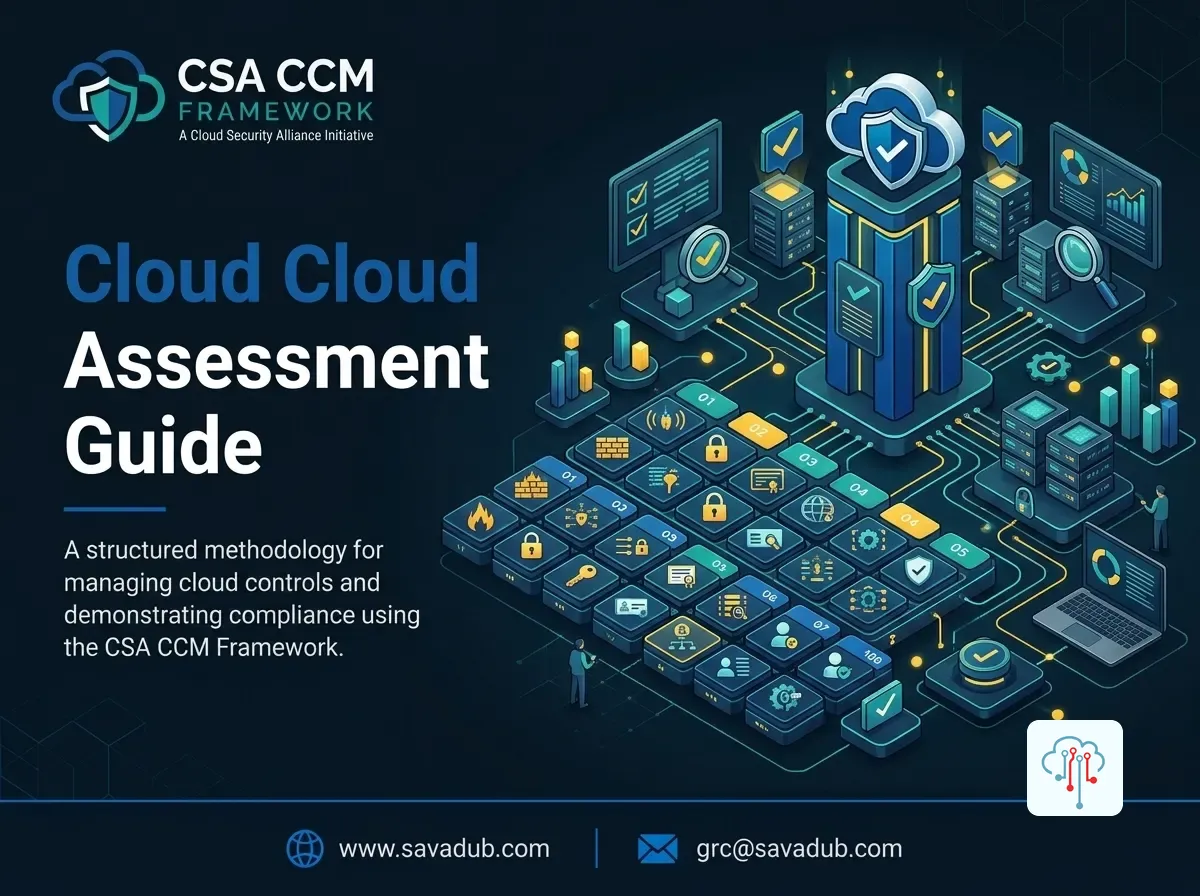
A complete guide to cloud security assessments — what they cover, how to assess IAM, network, data, logging, and compliance controls across AWS, Azure, and GCP, and how to build a continuous cloud security posture.
Cloud Security Assessment - Evaluating and Hardening Your Cloud Environment

Cloud Security Assessment: Finding and Fixing the Risks Hidden in Your Cloud Environment

Cloud environments introduce security risks that don't exist in traditional on-premises infrastructure — and they accumulate invisibly. A misconfigured S3 bucket takes seconds to expose. An IAM role with excessive permissions persists for years. A public IP on a development instance goes unnoticed until someone finds it. A cloud security assessment systematically identifies these risks before attackers do, and produces a prioritised remediation plan that moves your cloud environment toward a continuously secure posture.


What a Cloud Security Assessment Covers

A comprehensive cloud security assessment evaluates every significant risk domain in your cloud environment:

Identity and Access Management (IAM): The most critical cloud security domain. Assessment covers root account usage, MFA coverage for all users and roles, IAM policies (identifying wildcard permissions and privilege escalation paths), service account permissions, cross-account access, and federated identity configuration.

Network architecture and security: VPC design, subnet segmentation, security group rules (identifying overly permissive ingress rules, particularly 0.0.0.0/0 on sensitive ports), NACLs, flow log enablement, internet gateway exposure, and NAT gateway configuration.

Data security: Encryption at rest for all storage services (S3, RDS, EBS, EFS), encryption in transit (TLS enforcement), S3 bucket public access settings, S3 bucket policies, database exposure, and data backup configuration.

Logging and monitoring: CloudTrail enablement and configuration (all regions, management events, data events for sensitive buckets), CloudWatch metrics and alarms, GuardDuty enablement, Security Hub configuration, and log retention settings.

Compute security: EC2 instance exposure (public IPs, security groups), patch management for OS and applications, IMDSv2 enforcement (preventing SSRF attacks against instance metadata), Systems Manager usage for patching and session management.

Container and serverless security: ECS/EKS task role permissions, container image scanning, Lambda function permissions and environment variable security, API Gateway authentication and authorisation.

Compliance configuration: CIS Benchmark compliance for the cloud provider, SOC 2 or ISO 27001 control mapping for cloud infrastructure, regulatory compliance (HIPAA, PCI DSS) configuration requirements.

Common Cloud Security Findings

Across cloud security assessments, the most commonly identified high-severity findings include:

Publicly accessible S3 buckets: S3 buckets with public access enabled, or bucket policies allowing s3:GetObject to "*" (anyone on the internet). Data exposed through public S3 buckets is one of the most common causes of large-scale data breaches.

Overpermissive IAM policies: IAM policies granting "Action": "*" or "Resource": "*" — effectively administrator access. Developers often start with broad permissions for convenience and never tighten them.

MFA not enforced for IAM users: Console-accessible IAM users without MFA enabled represent a credential phishing risk. A single compromised credential without MFA gives an attacker full access to whatever that IAM user can do.

Security groups open to the internet on sensitive ports: Security groups allowing 0.0.0.0/0 on port 22 (SSH), 3389 (RDP), 3306 (MySQL), or 5432 (PostgreSQL) expose services to brute-force attacks from anywhere on the internet.

CloudTrail disabled or partial: CloudTrail not enabled in all regions, or not logging management events in write-only or all mode, creates blind spots in the audit trail.

Unpatched EC2 instances: EC2 instances running outdated OS or application versions with known CVEs — often in lower environments that are deprioritised for patching but have access to production data or VPCs.

Building Continuous Cloud Security Posture Management

A point-in-time cloud security assessment is valuable, but cloud environments change constantly — new resources are deployed, configurations drift, and teams make changes that introduce new risks. Cloud Security Posture Management (CSPM) tools provide continuous assessment of your cloud environment:

Native cloud tools: AWS Security Hub + Config Rules, Azure Security Center + Policy, GCP Security Command Center provide built-in continuous posture monitoring with policy compliance scoring.

Third-party CSPM: Tools like Wiz, Prisma Cloud, and Lacework provide more comprehensive, multi-cloud posture monitoring with contextualised risk scoring that accounts for data sensitivity, internet exposure, and privilege escalation paths.

Infrastructure as Code scanning: Scanning Terraform and CloudFormation templates in CI/CD pipelines prevents misconfigurations from being deployed in the first place — the most cost-effective control point.

Remediation workflows: CSPM alerts must flow into actionable remediation workflows — ticketing systems, Slack notifications, or automated remediation using Lambda or Azure Functions for high-confidence, low-risk fixes.

Why Organisations Choose Savadub

Deep GRC Expertise

Our team holds practitioner-level expertise across every major compliance framework — not just theoretical knowledge, but hands-on implementation experience across multiple industries and organisation sizes.

Engineers, Not Just Consultants

We implement controls, not just recommend them. Our GRC engineers configure the systems, write the integrations, and build the monitoring pipelines that make compliance operational.

Global and African Regulatory Coverage

We understand both the global frameworks and the African regulatory environment — NDPR, NDPA, CBN directives, NITDA guidelines, and regional data protection laws — making us uniquely positioned for organisations operating across Africa and internationally.

Internal and External Audit Capability

We provide both embedded internal audit functions and independent third-party audit support, including CPA-accredited audit coordination for SOC examinations.

End-to-End Engagement

From initial gap assessment through certification, continuous monitoring, and ongoing compliance management — we are your long-term GRC partner, not a one-time consultant.

Industries We Serve

Financial Services · Healthcare · Technology & SaaS · Manufacturing · Logistics & Trade · Government & Public Sector · Energy & Critical Infrastructure · Education & EdTech · Media & Broadcasting · Retail & E-Commerce · Professional Services · Food & Beverage

Deliverables You Receive

Working with Savadub, every engagement delivers a concrete set of outputs:

  • Gap Assessment Report — prioritised findings with effort estimates and risk ratings
  • Compliance Roadmap — milestone-based plan from current state to certification or attestation
  • Risk Register — organisational risk register with treatment plans
  • Policy Pack — all required policies authored, reviewed, and approved
  • Technical Control Implementation Evidence — configurations, screenshots, and audit trails
  • Internal Audit Report — independent assessment of control effectiveness
  • Audit Evidence Repository — organised, auditor-ready evidence collection
  • Executive Summary Presentation — board and leadership-ready compliance status
  • Remediation Tracker — structured tracking of open findings and closure evidence
  • Continuous Monitoring Setup — ongoing CCM pipeline for post-certification compliance

Get Started with Savadub

Savadub's GRC practice combines deep compliance expertise with technical engineering capability. We don't just advise — we build, implement, and operate your compliance program from the ground up.

Book a free GRC consultation with our team. We will review your current posture, identify your most critical gaps, and give you a clear, costed roadmap to compliance.

Contact us:

  • Email: grc@savadub.com
  • Phone: +234 816 734 2201
  • WhatsApp: +234 903 234 8435
  • Website: www.savadub.com

Share this story